
The Search Funnel Just Broke
You spent years mastering the old playbook: keywords, backlinks, page speed, landing page optimization. That funnel worked predictably. Search led to clicks. Clicks led to conversions. Attribution tracked everything.
Now AI Overviews appear for 13.14% of all queries, and that number keeps climbing. People ask complete questions instead of typing keywords. They get answers without clicking through to your website. Your carefully optimized pages might never get seen.
Google’s recent Leaders’ Brief addressed exactly this problem. The event didn’t waste time on hype. It focused on what’s actually changing in how customers discover brands, consume content, and make decisions. More importantly, it showed how marketers can adapt without rebuilding everything from scratch.
Here’s what really matters: the buyer journey isn’t linear anymore. Discovery happens in AI summaries. Evaluation happens through video content scattered across YouTube, Shorts, and connected TV. Purchase decisions get made based on signals your old attribution models can’t track.
How People Actually Search Now
Remember when you taught your team to think in keywords? “Running shoes” or “best CRM software” or “digital marketing agency near me”? That’s not how people search anymore.
Questions Replace Keywords
Users now type full sentences into search bars. “Which cloud security platform works best for a fintech startup with 20 employees?” or “Show me noise-cancelling headphones under $200 with at least 30-hour battery life.”
They expect immediate, specific answers. Google displays Search Generative elements for 86.8% of all queries. That means most searches now include AI-generated summaries at the top of results. Users read those summaries and often never scroll down to your carefully crafted meta descriptions.
This changes everything about visibility. You can rank number one for a keyword and still lose traffic because the AI Overview answered the question completely. Users got what they needed without clicking.
Decisions Happen Before Clicks
The evaluation process used to happen on your website. Users would visit, browse your product pages, read your case studies, maybe download a white paper. You could track their journey and optimize each step.
AI-powered search pulls that entire evaluation process forward. Users now compare options, review specifications, and narrow their choices before they ever visit a website. The AI summary does the research work they used to do themselves.
B2B buyers use this approach constantly. They’ll ask ChatGPT or Perplexity to compare three software solutions, then only visit the websites of their top two choices. By the time they contact sales, they’re already 70% through their decision process.
What This Means for Your Content
Your content needs to become part of the information ecosystem that AI tools reference. That requires different thinking than traditional SEO.
You need structured information that AI systems can easily parse and cite. FAQs formatted properly. Schema markup implemented correctly. Data presented clearly with proper context and sources.
You need original insights that make your content worth referencing. Generic advice gets ignored. Proprietary research, unique case studies, and specific expertise get cited in AI summaries.
You need regular updates that signal freshness. AI tools prefer recent information. Content from 2022 gets deprioritized compared to analysis from last month that reflects current market conditions.
Only 18% of businesses have optimized for conversational search. That gap represents opportunity. Start now and you’ll be ahead of most competitors.
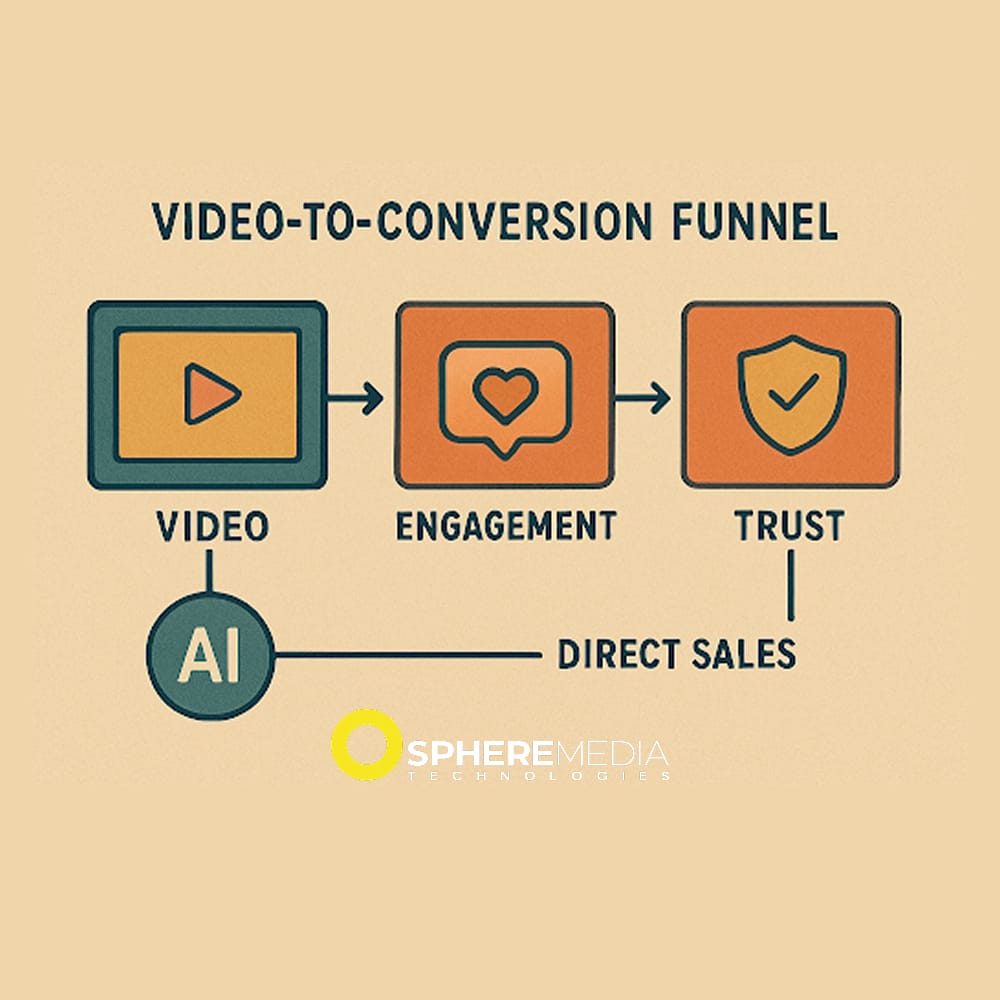
Video Became a Conversion Channel
Marketing teams used to treat video as a top-of-funnel tool. You’d create brand awareness videos, maybe some customer testimonials, and hope those impressions eventually led to conversions somewhere down the line.
That model just became obsolete. Video now drives direct business outcomes across the entire funnel.
AI Makes Production Accessible
Creating quality video used to require big budgets, specialized teams, and weeks of production time. AI-powered tools changed those economics completely.
Editing that took days now takes hours. You can test multiple versions of the same video with different messaging, visuals, or calls-to-action without starting from scratch each time. Localization that required expensive dubbing now happens through automated translation and subtitle generation.
Smaller brands can now produce video content that competes directly with enterprise budgets. A startup can create professional product demos, test multiple creative variations, and optimize based on performance data—all within days and reasonable budgets.
Performance Metrics That Actually Matter
About 90% of marketers report positive ROI from video marketing. But what counts as “positive ROI” has shifted dramatically.
Smart marketers now measure video performance by conversion contribution, not just reach or views. They track how video exposure shortens sales cycles. They connect video engagement to downstream purchases through proper attribution.
YouTube, Shorts, and connected TV all provide data that links viewing behavior to business outcomes. You can see which video formats drive demo requests. You can identify which creative elements correlate with higher conversion rates. You can test messaging variations and scale what actually moves revenue.
Video isn’t a brand awareness play anymore. It’s a performance channel you optimize like search or social ads.
Modular Content Systems Win
The brands seeing the best results produce video content modularly. They create core assets—customer interviews, product demonstrations, expert explanations—that can be remixed for different formats and audiences.
One customer success story becomes a 60-second testimonial for YouTube pre-roll, a 15-second clip for Instagram Stories, a detailed case study video for your website, and slides for your sales team’s presentations.
This modular approach maximizes the value of every piece of content you create. You invest effort building the core asset once, then adapt it efficiently across channels rather than starting fresh each time.
AI-assisted editing makes this repurposing faster and cheaper than ever. The competitive advantage now goes to teams that can iterate quickly based on performance data, not those with the biggest production budgets.
Measuring What You Can’t Fully See
Third-party cookies are disappearing. Privacy regulations keep tightening. Platform data gets more siloed. Your old attribution models stopped working accurately about two years ago, even if you haven’t fully acknowledged it yet.
The marketers adapting successfully aren’t trying to recreate their old tracking capabilities. They’re measuring different things entirely.
Business Impact Over Click Paths
Stop obsessing over every touchpoint in the customer journey. You can’t track them all anymore, and trying to do so wastes resources you need elsewhere.
Focus instead on business impact. Did your campaign drive incremental sales? Did brand awareness improve in your target audience? Did customers who engaged with your content have shorter sales cycles or higher lifetime value?
These aggregate measurements work even when you can’t track individual user journeys. They tell you what’s actually moving your business forward.
First-Party Data Becomes Essential
Brands that built direct relationships with customers have massive advantages now. Email lists, loyalty programs, customer communities, account-based data—these first-party sources let you understand customer behavior without depending on third-party cookies.
Build value exchanges that make customers want to share information. “Join our newsletter” doesn’t cut it. “Get personalized product recommendations based on your preferences” gives people a reason to provide data voluntarily.
Use consent-based collection everywhere. Be transparent about what data you collect and why. Let customers control their preferences easily. This transparency builds trust while giving you the insights you need.
New Measurement Tools for a Privacy-First World
Privacy-preserving measurement tools actually work now. Google’s Privacy Sandbox APIs provide directional insights without exposing individual user data. Advanced media mix modeling combines data from different sources to reveal channel contribution even without user-level tracking.
AI-powered predictive metrics help you estimate potential conversions from incomplete signals. Experiment-based attribution using geo-tests and holdout audiences shows true incrementality.
These approaches require different skills than traditional analytics. You need team members who can interpret modeled insights, not just read last-click reports. Invest in that capability now.
Real Results Without Perfect Attribution
One retail brand featured at the Leaders’ Brief maintained growth despite losing granular tracking. They shifted 40% of their measurement to experiment-based attribution. They integrated CRM and loyalty data with consent-based signals. They used mix modeling to understand how different touchpoints contributed to sales.
Results? Consistent conversion growth and improved brand consideration, with less detailed user-level data than they had three years ago.
The lesson: perfect attribution was always an illusion. Business impact measurement works better and respects customer privacy.
Three Strategic Shifts You Need to Make
Google’s Leaders’ Brief kept returning to one theme: marketers need new priorities, not just new tools. AI, privacy regulations, and video aren’t separate trends. They’re connected forces reshaping how customers discover and buy.
Here are the three shifts that matter most:
From Keywords to AI-Era Visibility
Ranking for keywords still matters, but it’s no longer sufficient. AI-powered answer engines like Search Generative Experience, Microsoft Copilot, and Perplexity change how people find information.
Your content needs to be structured for machine readability. Use schema markup. Format your FAQs properly. Present data clearly with proper sources and context. AI systems parse this structured information to generate their summaries.
Build cited authority through original research, unique case studies, and first-party insights. Generic content gets overlooked. Expertise that AI tools trust enough to reference gets visibility in their summaries.
Create content that genuinely helps people. Answer the questions your customers actually ask, not the keywords your tools tell you to target. AI systems prioritize relevance and usefulness over keyword density.
From Campaign Videos to Continuous Creative Testing
Video isn’t something you launch and forget anymore. It’s a performance channel that demands continuous optimization.
Think modularly. Create adaptable creative elements—story snippets, product demos, customer testimonials—that you can remix for different audiences and formats quickly.
Use AI-assisted tools to lower production costs and speed up testing. The brands winning with video aren’t those with the biggest budgets. They’re the ones iterating fastest based on performance data.
Measure video like you measure search ads. Track watch-through rates, click-through to conversion, and actual business impact. Optimize creative elements the same way you’d optimize ad copy.
From User-Level Tracking to Aggregate Business Measurement
Stop chasing perfect attribution. Focus on proving business impact with privacy-aligned measurement.
Build first-party data capture into your customer experience. Loyalty programs, preference centers, and zero-party data initiatives give customers reasons to share insights voluntarily.
Adopt aggregate and modeled measurement approaches. Media mix modeling, incrementality testing, and AI-powered predictive metrics reveal what’s driving growth even when you can’t track individual journeys.
Prioritize metrics that matter to your business: sales lift, brand equity, customer lifetime value. These outcome measurements work regardless of how much user-level tracking you have.
Your Action Plan for the Next Six Months
Theory doesn’t move businesses forward. Action does. Here’s what to tackle first:
Audit Your AI Discoverability
Check how your content appears in AI-powered search experiences. Search for your key topics in ChatGPT, Perplexity, Google’s AI Overviews, and Microsoft Copilot. Does your content get cited? Do competitors appear more prominently?
Review your structured data implementation. Product schema, FAQ markup, review snippets—are they properly configured? AI tools rely heavily on these signals.
Identify your highest-value pages and optimize them for AI visibility first. Add clear headers, citation-worthy data points, and structured information that AI systems can easily extract and reference.
Run Video Performance Tests
Pick two or three high-impact campaigns coming up in your calendar. Commit to testing AI-assisted video production for these campaigns.
Set real performance KPIs upfront: view-through conversions, sales lift, lead quality. Don’t just measure impressions and views.
Use AI editing tools to create multiple creative variations quickly. Test different messaging approaches, visual styles, and calls-to-action across your target segments.
Measure results weekly. Iterate based on what the data shows. The goal is learning what works for your specific audience, not perfecting a single campaign.
Strengthen Your Data Foundation
Map your current first-party data collection. Where do you capture customer information? How do you use it? What consent frameworks protect it?
Improve your value exchange. Give customers compelling reasons to share data: personalized experiences, exclusive content, meaningful rewards.
Implement privacy-preserving measurement tools. Start with Google’s Privacy Sandbox APIs or similar solutions. Add media mix modeling to understand channel contribution with incomplete tracking data.
Train your team on interpreting modeled insights. The skills that made someone great at Google Analytics won’t automatically transfer to mix modeling or incrementality testing.
Build or Buy AI Expertise
Assess your team’s current capabilities honestly. Who understands AI-powered search optimization? Who can manage AI-assisted video production? Who knows how to interpret privacy-aligned measurement?
Fill gaps through training or partnerships. Send team members to workshops and certification programs focused on AI marketing tools. Give them time to experiment and learn.
Work with agencies or consultants who specialize in AI adoption. They’ve already climbed the learning curve and can accelerate your progress while avoiding expensive mistakes. Sphere Media helps businesses navigate exactly these transitions—from AI-optimized content to performance video and privacy-first measurement.
Create rapid experimentation processes. Assign a small team to test new AI tools, document what they learn, and share insights with the broader organization.
What Wins Now
AI changed marketing faster than most industries adapt to any shift. Discovery happens in AI summaries. Video drives conversions across the funnel. Attribution models broke. Privacy regulations tightened.
You can’t ignore these changes. Your competitors aren’t. Customers already expect brands to show up where AI tools recommend them. They consume video content that answers their questions directly. They reward transparency about data usage.
The brands thriving right now treat AI as a strategic advantage, not just a tool. They optimize content for answer engines alongside traditional search. They produce video that drives measurable business outcomes. They measure aggregate impact instead of chasing perfect attribution.
Success requires action. Start with your highest-value opportunities: audit AI discoverability for your most important content, test AI-assisted video on upcoming campaigns, and strengthen first-party data collection with proper consent frameworks.
Partner strategically. Agencies like Sphere Media bring hands-on experience with AI discovery optimization, performance video production, and privacy-aligned measurement. We help translate these shifts into real business outcomes—more qualified leads, shorter sales cycles, and better ROI across channels.