
Why This Conversation Matters to Marketing Professionals
Marketing agencies face an uncomfortable truth: the tools we use to reach audiences can harm young people when applied without ethical guardrails.
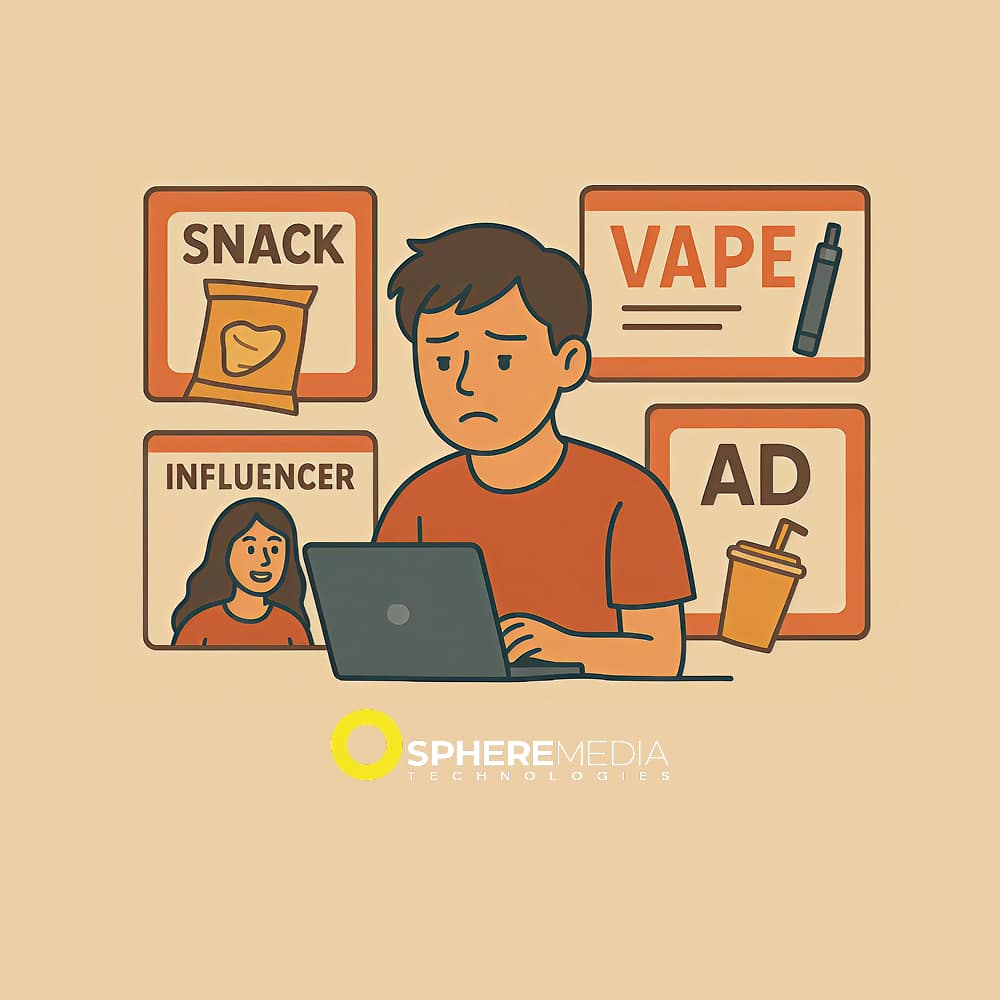
Recent research from New Zealand’s Public Health Communication Centre shows young people report high exposure to vape and alcohol marketing, often feeling overwhelmed by the constant stream of commercial messages. This isn’t just a regulatory problem or a platform problem. It’s an industry problem that requires honest discussion among marketing professionals.
We at Sphere Media believe ethical marketing isn’t just good for society—it’s good for business. Brands that build trust with younger audiences today create loyal customers tomorrow. Agencies that prioritize protection alongside performance position themselves as leaders in an industry reckoning with its impact.
This article examines how digital marketing affects youth, where current practices fall short, and how agencies can adopt protective measures without sacrificing effectiveness.
The Reality of Youth Digital Exposure
Young people live online. About 97% of teens aged 14-20 use the internet multiple times daily, spending much of that time on social platforms. In the United States, 95% of teens have smartphone access, with 60% describing themselves as “online almost constantly.”
That constant connectivity creates unprecedented exposure to commercial messaging. Unlike television ads that appeared in predictable blocks, digital marketing embeds itself into the content teens consume. Instagram Reels, TikTok challenges, YouTube videos, Snapchat stories—these platforms blend entertainment, social connection, and advertising so seamlessly that young users struggle to distinguish between them.
The format matters. Polished video ads, influencer endorsements, algorithmically promoted products, and viral challenges blur the line between organic content and paid promotion. Teens see these messages not as interruptions but as part of their social experience.
What Research Shows About Exposure Patterns
Studies reveal concerning patterns across countries. Young people encounter promotions for vaping products, alcohol, ultra-processed foods, and sugary drinks daily. These messages appear as playful filters, short videos, memes, or sponsored posts—formats designed to feel native to social media.
The marketing leverages how algorithms prioritize engaging content. The most clickable messages—often the most provocative or visually appealing—reach teens first. Once someone interacts with content about a product category, algorithms serve more of the same, creating feedback loops that intensify exposure.
Global research from institutions like Healthy Eating Research and the National Library of Medicine confirms this isn’t isolated to one region. Digital marketing of harmful products reaches young people worldwide through data-driven targeting and recommendation systems that ignore local regulations.
Advertisers spend over $12 billion annually targeting youth markets. That investment reflects how valuable young consumers are—and how aggressively companies pursue them.
How Digital Marketing Creates Harm
Understanding the mechanisms helps agencies identify where to intervene. The harm doesn’t come from individual ads but from systemic features of how digital marketing operates.
Normalization Through Constant Exposure
When teens scroll through feeds, they see ultra-processed foods, sugary drinks, vaping products, and alcohol presented as part of everyday routines. This “ambient advertising” makes consumption feel normal and expected rather than optional.
Research shows this constant exposure lowers the age when young people first try potentially harmful products. Brands effectively recruit youth as informal promoters by encouraging them to share, tag, or create content around campaigns. The line between peer recommendation and paid marketing disappears.
Algorithmic Amplification
Social platforms don’t just show ads—they amplify content that generates engagement. Once a teen interacts with a vaping meme, an alcoholic drink video, or a fast-food promotion, algorithms deliver more similar content.
This “rabbit hole effect” means harmful messaging becomes persistent and difficult to escape. Traditional parental or community controls can’t counter platform personalization that operates invisibly in the background.
About 67% of surveyed teens report feeling insecure after viewing influencer content, and 49% admit to changing their behavior to resemble influencers they follow. The influence extends beyond products to self-perception and social comparison.
Platform Design That Maximizes Attention
Features like infinite scroll, push notifications, streaks, and algorithmic recommendations maximize time on platform. These design choices aren’t accidents—they reflect deliberate strategies to increase engagement.
Longer sessions mean greater cumulative exposure to ads. The constant pull of feeds drains attention from schoolwork, offline activities, and sleep—factors closely linked to mental health and development.
Many teens describe feeling “addicted” to social media, recognizing they spend more time than intended but struggling to reduce usage. That compulsive engagement benefits advertisers through repeated message exposure.
Impact on Identity and Self-Worth
About 25% of girls say social media hurt their mental health, compared to 14% of boys. The gender gap suggests different types of content affect demographics differently.
Teens encounter idealized lifestyles and body images alongside promotions for products promising quick fixes—weight-loss supplements, appearance-enhancement products, performance aids. This creates cycles where marketing doesn’t just sell products but sells unattainable ideals.
The combination of influencer-driven glamour and algorithmically served ads generates aspiration mixed with inadequacy. Young people compare their real lives to curated highlights while being shown products marketed as solutions to perceived deficiencies.
Covert Advertising That Bypasses Critical Thinking
Much youth advertising relies on native content and influencer endorsements that lack clear disclosure. Research shows young viewers frequently fail to identify sponsored content as advertising, particularly in short-form videos.
Ads embedded in vlogs, challenges, memes, or “haul” videos trigger less skepticism than obvious commercials. This covert approach leverages parasocial trust—the feeling that influencers are friends rather than paid promoters.
When disclosure does exist, it’s often minimal: a small hashtag or caption buried where teens scroll past quickly. The Federal Trade Commission has called attention to inadequate disclosure practices, but enforcement remains limited.
Where Regulations Fall Short
Current advertising regulations were designed for television and print media. They don’t adequately address how digital platforms operate.
The Policy Gap
New Zealand, like many countries, restricts traditional broadcast advertising more strictly than online marketing. Laws limiting tobacco and vape advertising struggle to control influencer-led promotion and peer-shared content on social platforms.
Voluntary industry pledges exist for limiting alcohol and junk food marketing to minors, but no binding laws prevent these ads from appearing in digital feeds. Advertising standards authorities provide codes for responsible marketing to children, but compliance depends mainly on complaint-driven enforcement.
These protections were built for an earlier era. They can’t effectively counter algorithmic personalization and targeting.
Enforcement Challenges
Even where guidelines exist, enforcement faces obstacles:
Cross-border platforms mean ads may originate from jurisdictions where local restrictions don’t apply. An influencer promoting vaping products from one country can reach teens globally.
Algorithmic opacity prevents regulators from understanding how or why certain ads target teens. Platforms don’t provide transparency into their targeting mechanisms.
Weak age verification relies on self-reported birthdates. Underage users easily appear as adults to ad-delivery systems by entering false information during signup.
Fragmented oversight splits responsibility among health agencies, consumer protection bureaus, and advertising self-regulatory bodies with overlapping yet incomplete authority.
These structural factors make it difficult for any single country to comprehensively protect young users.
International Examples Worth Studying
Some regions show what stronger regulation looks like:
The UK implemented junk food advertising bans on television and online for content primarily viewed by children. The EU Audiovisual Media Services Directive sets standards for restricting high-fat, salt, and sugar food marketing to minors.
Norway and Sweden maintain tight controls on advertising to children across all channels, including digital. Australia, the UK, and California have explored age-appropriate design codes that place safety obligations on platforms, including limits on profiling minors for targeted ads.
These moves demonstrate that policy innovation is possible when governments prioritize child protection over industry convenience.
What Marketing Agencies Can Do Now
Agencies don’t need to wait for comprehensive regulations. We can adopt protective practices that reduce harm while maintaining campaign effectiveness.
Design Campaigns With Age Appropriateness in Mind
Before launching campaigns, ask: could this reach minors? If yes, does the product or message potentially harm young people?
For products like alcohol, vaping devices, or supplements, implement strict age gates. Use platform targeting tools to exclude users under 21 (or 18, depending on the product). Avoid influencers whose audiences skew young, even if the influencer themselves is an adult.
For food and beverage campaigns, consider nutritional value. Heavily promoting ultra-processed foods or sugary drinks to teens contributes to health problems that manifest years later. Clients selling these products can still succeed by targeting adult audiences or reformulating products to reduce harm.
Prioritize Transparency in All Paid Content
Every piece of sponsored content should carry clear, prominent disclosure. Not hashtags buried in long captions. Not tiny text at video endings. Bold, upfront statements like “Paid partnership with [Brand]” that viewers can’t miss.
Train influencers you work with on proper disclosure. Make it a contract requirement, not a suggestion. Monitor compliance and address violations immediately.
Transparency builds trust. When audiences—especially young audiences—feel deceived by hidden advertising, they turn against both the influencer and the brand.
Refuse Exploitative Targeting Tactics
Some targeting capabilities should simply stay off-limits for ethical agencies:
Don’t target based on vulnerabilities. Algorithms can identify users experiencing anxiety, low self-esteem, or body image issues. Using these signals to sell products that promise fixes is predatory.
Don’t employ dark patterns. Countdown timers, artificial scarcity, and “fear of missing out” manipulations push impulsive decisions. These tactics harm consumers of any age but especially affect teens still developing self-regulation.
Don’t exploit parasocial relationships. Encouraging influencers to present paid promotions as genuine recommendations crosses ethical lines when audiences are young and trusting.
Advocate for Platform Accountability
Agencies interact with platforms constantly. Use that relationship to push for better youth protections:
Ask platforms about their age verification processes. Demand better tools for excluding minor audiences from age-restricted product campaigns.
Support initiatives like ad libraries that let researchers and regulators see what ads reach which demographics. Transparency helps identify problems and measure progress.
Encourage platforms to offer simple opt-out mechanisms for personalized advertising, especially for younger users. Chronological feeds and interest-neutral content reduce algorithmic amplification of harmful messages.
Partner With Clients on Ethical Guidelines
Have explicit conversations with clients about youth marketing ethics. Some won’t care. Others are genuinely concerned but unsure how to balance growth with responsibility.
Help clients understand that short-term gains from aggressive youth targeting can create long-term reputation risks. Public opinion is shifting. Brands caught marketing harmful products to minors face backlash that damages customer loyalty.
Propose alternative strategies that reach adult consumers without relying on youth exposure. Better targeting, different platforms, or content strategies that appeal to older demographics can maintain results while reducing ethical concerns.
Educate Internal Teams
Your agency’s creative teams, media buyers, and account managers all need literacy on youth protection issues:
Creative teams should understand how certain imagery, language, or celebrity choices appeal disproportionately to young audiences—and when that’s inappropriate.
Media buyers should know which platform features and targeting parameters create youth exposure, even unintentionally.
Account managers need language for having difficult conversations with clients about ethical boundaries.
Regular training keeps these issues top-of-mind rather than afterthoughts discovered during campaign reviews.
The Business Case for Ethical Marketing
Protecting youth isn’t just moral—it’s strategic.
Building Long-Term Brand Value
Young people remember which brands treated them with respect. Companies that avoid manipulative tactics during teen years often gain loyal customers in adulthood. The teenager who appreciates that a brand didn’t bombard them with harmful messages becomes the adult customer who chooses that brand over competitors.
Trust compounds over time. Ethical practices today build reputation equity that pays dividends for years.
Avoiding Regulatory and Reputational Risks
Regulations are tightening globally. The EU Digital Services Act, UK Online Safety Act, and various U.S. state laws all impose new obligations on platforms and advertisers regarding youth protection.
Agencies that adopt protective practices now avoid scrambling to comply later. You’re ahead of regulations rather than racing to catch up.
Public scrutiny is intensifying too. Investigative journalists and advocacy groups regularly expose harmful youth marketing practices. The brands and agencies caught in these stories suffer damage that far exceeds any revenue from the campaigns in question.
Differentiating in a Competitive Market
Ethical positioning differentiates agencies in crowded markets. When prospective clients evaluate agencies, demonstrating proactive youth protection measures signals sophistication and responsibility.
Parents and educators increasingly influence brand decisions, even for products marketed to adults. Showing your agency refuses exploitative youth targeting appeals to these stakeholders.
Some clients specifically seek agencies with strong ethical frameworks. The market for responsible marketing is growing, not shrinking.
Moving Forward: Questions for Your Agency
If you lead or work in a marketing agency, consider these questions:
Do you have written policies about youth marketing? Can every team member articulate your standards?
How do you verify campaign targeting doesn’t inadvertently reach minors? What tools and processes prevent that exposure?
When was the last time your team discussed youth protection in campaign planning? Is it a checkbox or a genuine consideration?
Do your influencer contracts require prominent disclosure? How do you monitor compliance?
Have you declined campaigns or tactics because of youth protection concerns? What would trigger that decision?
These questions help identify gaps between stated values and actual practices. Closing those gaps requires leadership commitment, process changes, and occasional difficult conversations with clients.
Our Commitment at Sphere Media
We recognize that digital marketing agencies share responsibility for protecting young people online. That’s why Sphere Media commits to:
Transparent practices across all campaigns, with special attention to clear disclosure in influencer partnerships and sponsored content.
Age-appropriate targeting that actively excludes minors from campaigns for products that could harm them, even when platforms make broad targeting easy.
Client education about ethical marketing practices, helping brands understand that responsible approaches can achieve business goals without exploiting young audiences.
Continuous learning about youth protection issues, staying informed on research, regulations, and best practices as this field develops.
We don’t claim perfection. This is complicated work. But we believe marketing agencies must lead by example, demonstrating that effectiveness and ethics can coexist.
The Path Forward for the Industry
Digital marketing’s impact on youth requires collective action. No single agency or regulation will solve this problem alone.
Platforms need to implement and enforce stricter youth protections: robust age verification, limited targeting of minors, transparent ad libraries, and simple opt-out mechanisms for personalized advertising.
Regulators must close gaps in current laws, extending protections from traditional media to digital environments and creating meaningful penalties for violations that harm young people.
Brands should voluntarily adopt standards that go beyond minimum legal requirements, recognizing that treating young audiences ethically builds lasting value.
Agencies—including ours—must refuse exploitative tactics, push platforms and clients toward better practices, and contribute expertise to policy discussions about effective youth protection.
Parents and educators need support understanding digital marketing mechanics so they can help young people develop critical media literacy.
Young people themselves deserve voices in these conversations. Their lived experiences should inform policies and practices designed to protect them.
A Call to Industry Responsibility
Marketing professionals entered this field to connect audiences with products and services that improve their lives. That core purpose gets distorted when our tools harm vulnerable populations.
We have the power to change course. Every campaign we plan, every platform we choose, every targeting parameter we set—these decisions either protect young people or expose them to harm.
The data is clear. The mechanisms are understood. The ethical imperative is obvious.
The question isn’t whether digital marketing affects youth mental health, product choices, and development—it does. The question is what we do with that knowledge.
At Sphere Media, we choose responsibility. We invite other agencies, brands, and platform partners to join us in proving that marketing can drive business growth while protecting the next generation.
This conversation needs to continue beyond this article. We encourage industry discussions, client dialogues, and collaborative efforts to develop better standards. Reach out to our team if you want to discuss youth protection strategies for your campaigns or explore how ethical marketing practices can strengthen your brand.
The future of marketing will be judged not just by the campaigns we created but by the values we upheld while creating them. Let’s ensure that judgment is favorable.